How to Grow Plants Using Companion Planting Techniques
Companion planting is a gardening method that has been used for centuries. It involves growing different plants together to benefit each other. This technique can help you create a healthier, more productive garden while reducing the need for chemicals. Additionally, it makes efficient use of your garden space.
Whether you’re a beginner or an experienced gardener, companion planting offers practical solutions to common problems. Therefore, understanding these techniques can transform your garden into a thriving ecosystem.
What Is Companion Planting?
Companion planting means placing certain plants near each other for mutual benefit. These benefits can include pest control, improved growth, and better flavor. However, not all plants work well together.
The practice dates back to ancient civilizations. Native Americans famously used the “Three Sisters” method, planting corn, beans, and squash together. Each plant supported the others in different ways. The corn provided a structure for beans to climb. Meanwhile, the beans added nitrogen to the soil. The squash leaves shaded the ground and prevented weeds.
Today, gardeners continue to use these time-tested strategies. Moreover, modern research has validated many traditional companion planting combinations.
Benefits of Companion Planting
Companion planting offers numerous advantages for your garden. First, it naturally controls pests without harmful chemicals. Certain plants repel insects that would otherwise damage your crops.
Second, this method improves soil health. Some plants add nutrients while others prevent soil depletion. Consequently, your soil remains fertile year after year.
Third, companion planting maximizes garden space. You can grow more varieties in the same area. Tall plants provide shade for those that need it. Additionally, deep-rooted plants don’t compete with shallow-rooted ones.
Fourth, it attracts beneficial insects. Pollinators and predatory insects help your garden thrive. Therefore, you create a balanced ecosystem.
Finally, some combinations enhance flavor and growth. Plants can influence the taste and size of their neighbors. According to The Old Farmer’s Almanac, proper companion planting can significantly improve harvest quality.
Popular Companion Planting Combinations
Understanding which plants work well together is essential. Here are some proven combinations that deliver excellent results.
Tomatoes and Basil
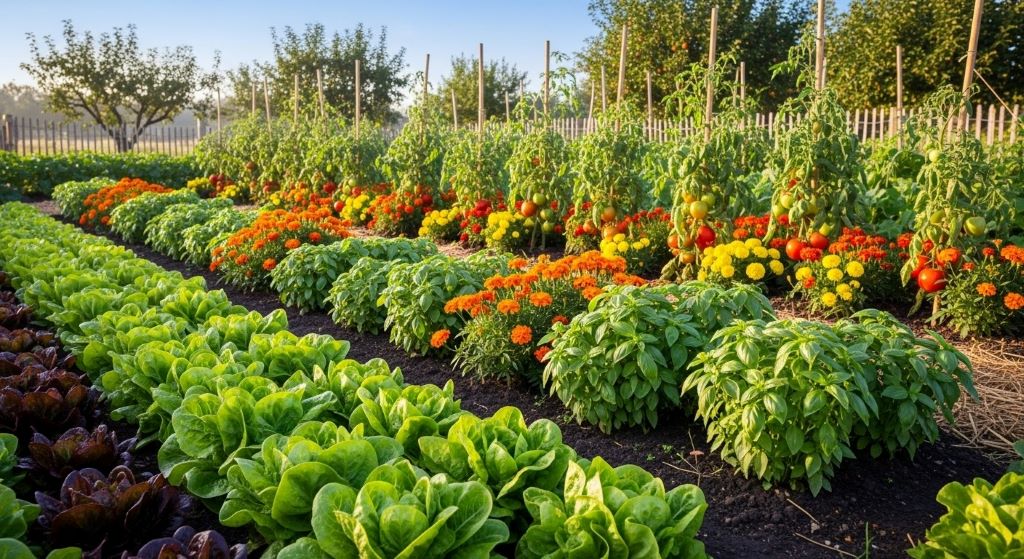
Tomatoes and basil are classic companions. Basil repels aphids, whiteflies, and hornworms that attack tomatoes. Furthermore, many gardeners believe basil improves tomato flavor.
Plant basil around the base of tomato plants. This combination also makes harvesting convenient. You’ll have both ingredients for fresh caprese salad in one spot.
Carrots and Onions
Carrots and onions benefit each other significantly. Onions deter carrot flies with their strong scent. Meanwhile, carrots repel onion flies.
Alternate rows of these vegetables for best results. However, make sure both plants have enough space to grow. Crowding can reduce their effectiveness.
Lettuce and Tall Flowers
Lettuce grows best in partial shade during hot weather. Therefore, planting it alongside tall flowers like sunflowers works perfectly. The flowers provide necessary shade while lettuce keeps the soil cool.
This combination also looks beautiful in your garden. Additionally, the flowers attract pollinators that benefit nearby vegetables.
Beans and Corn
Beans and corn form a mutually beneficial partnership. Corn stalks support climbing bean vines. Meanwhile, beans fix nitrogen in the soil, which corn needs.
Plant corn first and let it grow several inches tall. Then add bean seeds around the base. This timing ensures the corn is strong enough to support the beans.
Marigolds and Vegetables
Marigolds are among the best companion plants for any garden. They repel aphids, mosquitoes, and other harmful insects. Moreover, their roots deter nematodes in the soil.
Plant marigolds throughout your vegetable garden. They work well with tomatoes, peppers, and squash. However, avoid planting them near beans, as they may inhibit bean growth.
Plants to Keep Apart
Just as some plants benefit each other, others can harm their neighbors. Therefore, knowing which combinations to avoid is equally important.
Tomatoes and potatoes should stay separated. Both belong to the nightshade family and attract similar pests and diseases. Consequently, planting them together increases infection risk.
Beans and onions don’t mix well. Onions can stunt bean growth. Similarly, beans don’t thrive near garlic or chives.
Fennel should grow alone. It inhibits the growth of most plants. Additionally, it attracts beneficial insects away from other areas.
Brassicas like cabbage and broccoli don’t pair well with strawberries. They compete for nutrients and can reduce each other’s yields.

How to Plan Your Companion Planting Garden
Planning is crucial for companion planting success. Start by listing the vegetables and herbs you want to grow. Then research which plants complement each other.
Create a garden map before planting season. Divide your space into sections based on plant height and sun requirements. Tall plants should go on the north side to avoid shading shorter ones.
Consider plant families when planning. Rotating plant families each year prevents soil depletion and disease buildup. Therefore, keep records of what you plant where.
Think about timing as well. Some plants grow quickly while others need the full season. Succession planting allows you to use space efficiently throughout the growing period.
Additionally, include flowers and herbs in your plan. They provide pest control and attract pollinators. According to National Geographic, biodiversity in gardens creates more resilient ecosystems.
Pest Control Through Companion Planting
Natural pest control is one of the greatest benefits of companion planting. Many herbs repel specific insects effectively.
Rosemary deters cabbage moths and bean beetles. Plant it near brassicas and beans for protection. Similarly, thyme repels cabbage worms and whiteflies.
Nasturtiums act as trap crops. Aphids prefer them over other plants. Therefore, plant nasturtiums around the edges of your garden to lure pests away.
Garlic repels a wide range of insects including aphids and Japanese beetles. However, it also deters some beneficial insects, so use it strategically.
Chrysanthemums contain pyrethrum, a natural insecticide. They repel roaches, ants, ticks, and bedbugs. Moreover, they add beautiful color to your garden.
Improving Soil Health
Companion planting naturally enriches soil. Legumes like beans, peas, and clover fix nitrogen from the air. Their root nodules convert it into a form plants can use.
Plant legumes where you’ll grow heavy feeders the following year. Tomatoes, corn, and squash will benefit from the nitrogen-rich soil. Therefore, this practice reduces fertilizer needs.
Deep-rooted plants like dandelions and comfrey bring nutrients up from lower soil layers. These nutrients then become available to shallow-rooted plants. Additionally, their roots break up compacted soil.
Cover crops between seasons also improve soil structure. Plant clover or rye after harvesting. They prevent erosion and add organic matter when tilled under.
Common Mistakes to Avoid
Even experienced gardeners make companion planting mistakes. Overcrowding is the most common error. Plants need adequate space regardless of their compatibility.
Follow spacing guidelines for each plant variety. Crowded plants compete for resources and become stressed. Consequently, they’re more susceptible to pests and diseases.
Another mistake is ignoring individual plant needs. Companion plants should have similar water and sunlight requirements. Don’t pair drought-tolerant herbs with water-loving vegetables.
Some gardeners rely solely on companion planting for pest control. However, it should complement other practices. Regular monitoring and hand-picking pests remain important.
Finally, don’t expect immediate results. Companion planting benefits accumulate over time. Therefore, patience is essential for long-term success.
Conclusion
Companion planting is a powerful technique for creating productive, healthy gardens. By growing compatible plants together, you naturally control pests, improve soil, and maximize space. The benefits extend beyond yields to include reduced chemical use and increased biodiversity.
Start small by trying a few proven combinations. Observe how your plants respond and adjust your approach accordingly. Keep records to refine your strategy each season. With practice, companion planting becomes second nature.
Remember that successful gardening involves continuous learning. Each garden is unique, so experiment to find what works best in your conditions. Therefore, embrace both successes and failures as valuable lessons.
Frequently Asked Questions
What is the easiest companion planting combination for beginners?
Tomatoes and basil are the easiest combination for beginners. Both plants have similar care requirements and basil naturally repels pests that attack tomatoes. Additionally, you can use both in cooking together.
Can companion planting completely eliminate the need for pesticides?
Companion planting significantly reduces pest problems but may not eliminate them entirely. It works best as part of an integrated pest management approach. Therefore, combine it with other organic practices for optimal results.
How close should companion plants be to each other?
Plant companions close enough to interact but not so close they compete for resources. Generally, follow the spacing recommendations for each plant variety. However, aromatic herbs can be slightly closer since their scents deter pests.
Does companion planting work in container gardens?
Yes, companion planting works excellently in containers. Choose plants with similar water and light needs for the same pot. For example, tomatoes and basil thrive together in large containers.
How long does it take to see results from companion planting?
Some benefits appear immediately, such as pest deterrence from aromatic plants. However, soil improvement and ecosystem development take one to three seasons. Therefore, view companion planting as a long-term garden investment.
Related Topics:
Regenerative Gardening: Cultivating a Thriving Ecosystem in Your Backyard (and Beyond)
The Perpetual Salad Bowl: Mastering the Art of Cutting Lettuce for Continuous Growth