The True Cost of Ownership: Ride-On Mower vs Compact Tractor Over Five Years
When comparing a ride-on mower and a compact tractor, many buyers focus heavily on the initial purchase price. While upfront cost is certainly important, it only tells part of the story. A machine that appears less expensive on day one may cost more over time, while a larger initial investment could potentially deliver greater value across several years of ownership.
For property owners managing large gardens, estates, paddocks, or smallholdings, understanding the true cost of ownership is essential. Looking beyond the purchase price and considering factors such as maintenance, fuel, versatility, and resale value provides a much clearer picture of which machine offers the best long-term investment.
The Initial Investment
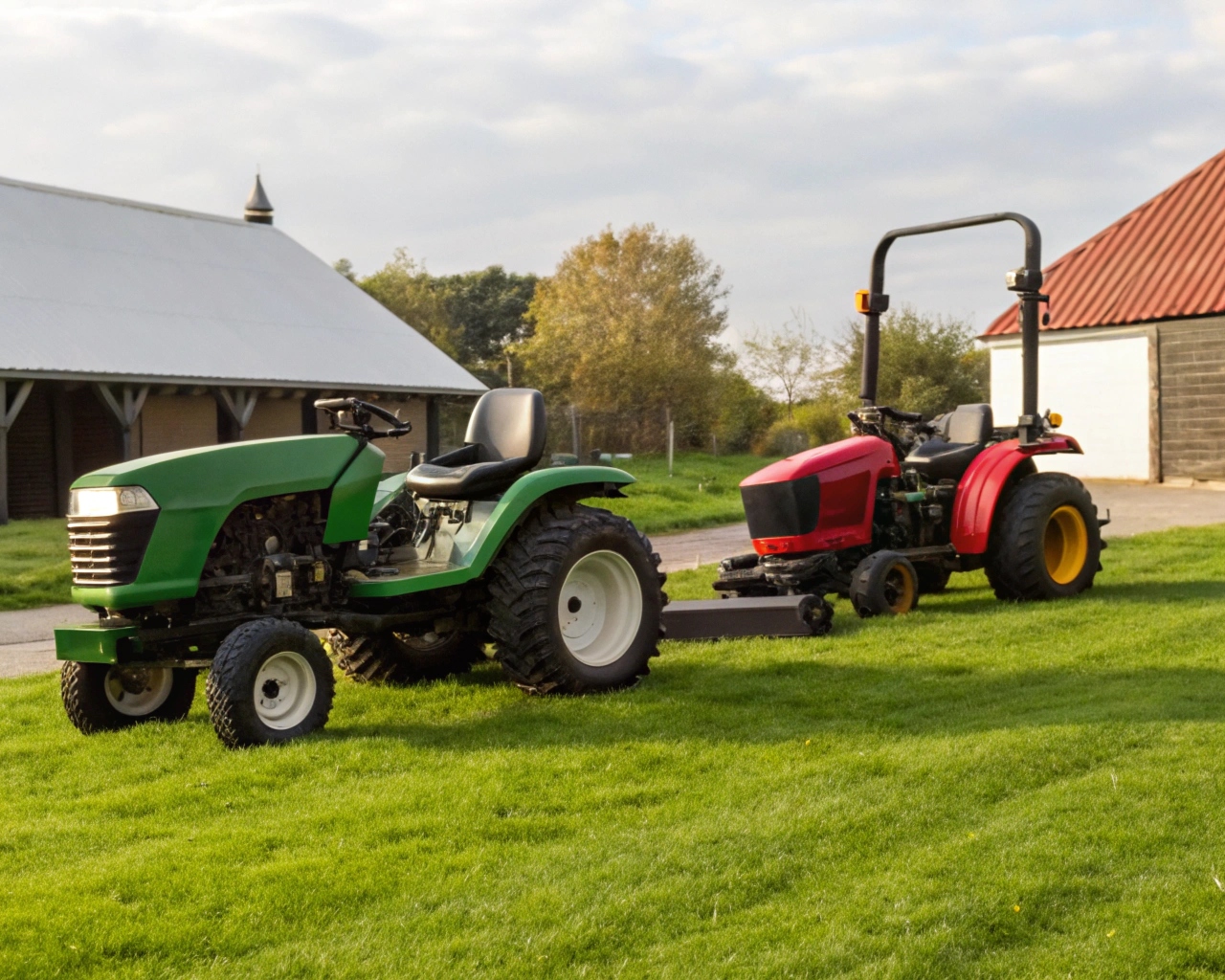
The most obvious difference between a ride-on mower and a compact tractor is the purchase price. In most cases, a ride-on mower is significantly less expensive. Designed primarily for grass cutting, these machines offer an affordable solution for homeowners who need efficient lawn maintenance without requiring extensive additional capabilities.
Compact tractors, by contrast, are built to perform a wider variety of tasks. Their stronger construction, more powerful engines, and ability to support multiple attachments contribute to a higher purchase price. For some buyers, this difference can be substantial.
However, focusing solely on the initial investment can sometimes be misleading. The question is not simply which machine costs less to buy, but which machine delivers the most value over its lifespan.
For properties where mowing represents almost all maintenance activity, a ride-on mower may provide everything needed at a lower overall cost. If the property requires additional work such as towing, landscaping, ground preparation, or material handling, the value equation can begin to shift.
Running Costs and Maintenance
Fuel consumption is one area where ride-on mowers often have an advantage. Their smaller engines generally use less fuel during routine mowing operations, making them relatively economical to run for their intended purpose.
Compact tractors consume more fuel due to their larger engines and greater capabilities. While the difference may not be dramatic for occasional users, it can become noticeable over several years of ownership.
Maintenance costs should also be considered. Both machine types require regular servicing, including oil changes, filter replacements, blade maintenance, and routine inspections. Ride-on mowers are often simpler and may have slightly lower servicing costs, although this can vary considerably depending on model and usage.
Compact tractors may involve higher maintenance expenses, particularly if they are used extensively with multiple attachments. However, their heavier-duty construction can also contribute to longer service lives when properly maintained.
Many owners underestimate the cost of replacement equipment. A ride-on mower may eventually require separate purchases to handle tasks beyond mowing, while a compact tractor can often perform those jobs using attachments connected to the same machine.
Around the point where buyers begin comparing long-term ownership costs, suppliers such as Ron Smith often encourage customers to think carefully about the range of tasks they expect to undertake over the coming years rather than focusing solely on immediate mowing requirements.
Versatility and Hidden Savings
One of the biggest advantages of a compact tractor is versatility. While a ride-on mower excels at cutting grass, a tractor can often perform numerous additional jobs including towing, grading, cultivating, lifting, and snow clearance.
This flexibility can create hidden savings. Instead of purchasing separate machines for different tasks, property owners may be able to rely on a single tractor equipped with appropriate attachments.
The financial value of this versatility depends heavily on how the property is used. Someone managing a formal lawn may gain little benefit from these additional capabilities. By contrast, a smallholding owner or estate manager may regularly use a tractor for tasks that would otherwise require specialist equipment.
Time savings also have value. Completing jobs more efficiently can reduce labour requirements and improve overall property maintenance productivity.
Resale Value After Five Years
Depreciation is another important consideration. Most machinery loses value over time, but the rate of depreciation varies.
Ride-on mowers generally retain value reasonably well when maintained properly. However, higher-end compact tractors often perform particularly strongly in the used machinery market. Their durability and broad appeal can help support resale values even after several years of ownership.
Buyers looking at five-year ownership periods should therefore consider not only how much a machine costs to buy, but also how much of that investment may be recovered when it is eventually sold.
Storage requirements may influence costs as well. Compact tractors often require more space, particularly when attachments are included. For some owners, this may involve additional storage solutions or modifications to existing facilities.
Insurance, transportation, and attachment purchases can also contribute to overall ownership costs. These factors are frequently overlooked during the buying process despite having a measurable impact on long-term expenditure.
Ultimately, there is no universally correct choice. The true cost of ownership depends on the property, the workload, and the owner’s expectations. For straightforward mowing duties, a ride-on mower often represents the most economical solution. For properties requiring a wider range of maintenance activities, a compact tractor may justify its higher initial cost through greater versatility and productivity.
By evaluating ownership over a five-year period rather than focusing solely on purchase price, buyers can make more informed decisions. The machine that appears more expensive at first glance may ultimately provide better value, while the cheaper option may prove sufficient for those with simpler requirements.
The best investment is rarely determined by cost alone. Instead, it is defined by how effectively a machine meets the demands of the property it is expected to maintain.