Small Raised Bed Companion Planting Diagram
A small raised bed companion planting diagram works best when taller plants stay at the back, root crops grow along edges, and beneficial companion plants sit beside each other. This simple layout improves space, supports healthy growth, and naturally reduces many common garden problems.
Raised bed gardening continues growing in popularity because it saves space and simplifies maintenance. According to the National Gardening Association, millions of households grow vegetables every year, while companion planting can improve biodiversity and reduce pest pressure. This guide explains practical layouts, ideal plant combinations, and easy planning methods for creating productive small raised beds.
Why Use a Small Raised Bed Companion Planting Diagram?
A companion planting diagram removes guesswork before planting begins. Furthermore, it helps every vegetable receive suitable neighbors for healthier development.
Many gardeners also improve surrounding landscapes while organizing planting areas. Attractive borders inspired by English cottage gardens create beauty while supporting pollinators and beneficial insects.
A planned layout increases airflow between crops and limits disease spread. Consequently, plants remain healthier throughout the growing season.
- Uses available growing space efficiently
- Reduces common insect problems naturally
- Improves pollination opportunities
- Makes watering easier
- Simplifies harvesting tasks
- Creates attractive garden organization
How Companion Planting Works
Companion planting places compatible vegetables, herbs, and flowers close together. As a result, each plant supports nearby crops through natural benefits.
Some herbs discourage harmful insects through strong scents. Meanwhile, flowering plants attract bees, butterflies, and other valuable pollinators.
Certain vegetables also improve soil conditions for neighboring plants. Therefore, thoughtful placement supports healthier growth without unnecessary chemicals.
Plants That Work Well Together
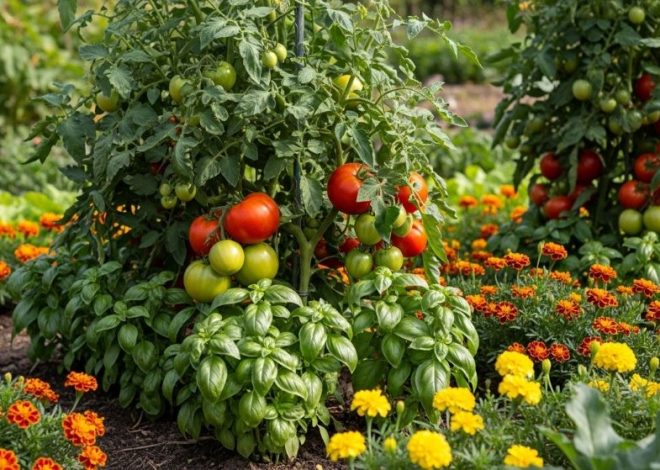
- Tomatoes with basil and marigolds
- Carrots with onions
- Beans with cucumbers
- Lettuce beneath taller tomatoes
- Spinach beside radishes
- Peppers with basil
Plants That Should Stay Apart
- Tomatoes beside potatoes
- Beans near onions
- Carrots beside dill after maturity
- Corn beside tomatoes
- Fennel near most vegetables
Small Raised Bed Companion Planting Diagram Example
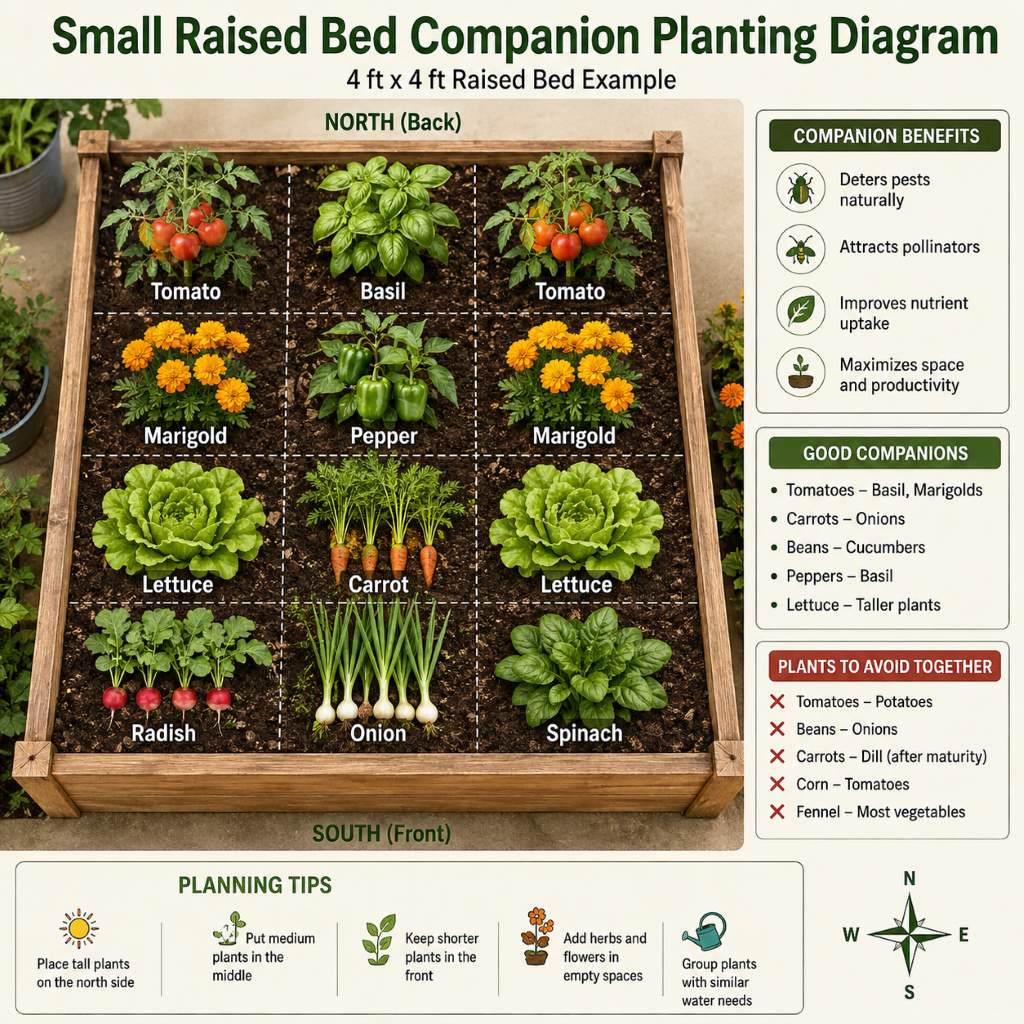
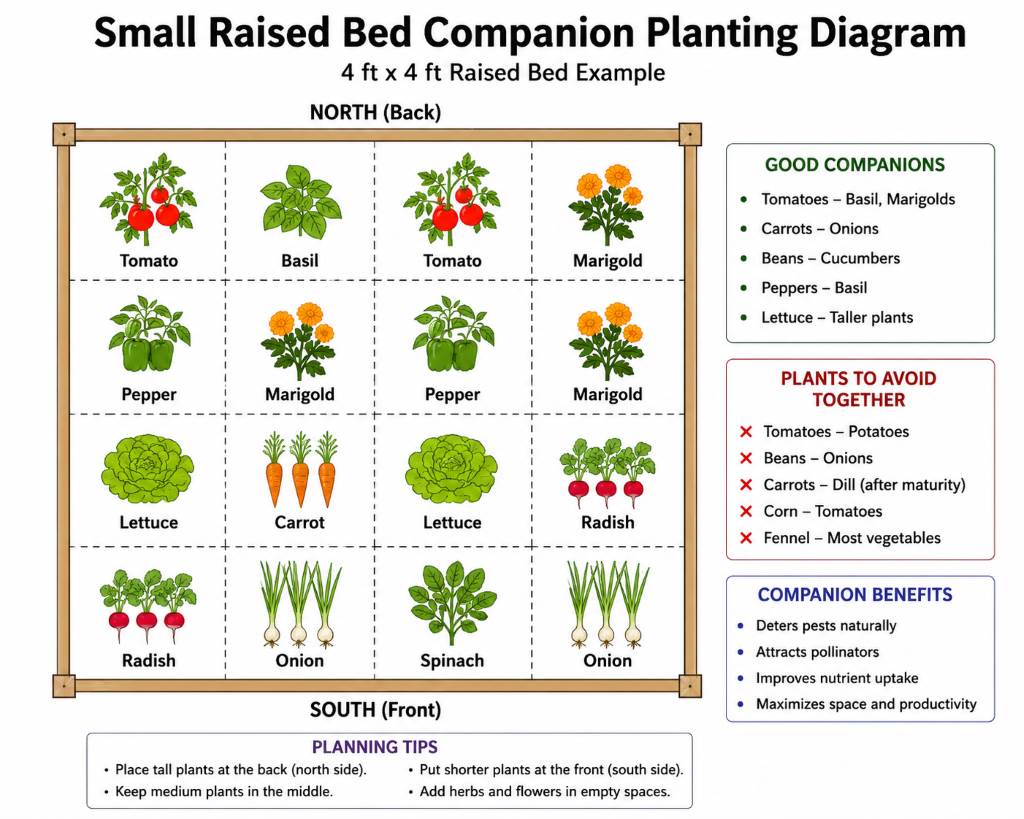
A simple four by four foot raised bed offers excellent growing potential. Likewise, organized spacing prevents overcrowding during active growth.
Many gardeners also upgrade nearby outdoor spaces using ideas from house look more luxurious projects because attractive surroundings encourage regular garden care.
Back (North)

Tomato     Basil      Tomato

Marigold   Pepper     Marigold

Lettuce    Carrot     Lettuce

Radish     Onion      Spinach

Front (South)
Tall tomatoes remain along the northern edge to prevent shading shorter vegetables. Meanwhile, basil grows nearby for mutual benefits.
Leafy vegetables stay toward the southern side because they receive adequate sunlight. Consequently, harvesting remains simple throughout the season.
Best Companion Plants for Small Raised Beds
Select plants with similar watering and sunlight needs for consistent growth. Additionally, avoid mixing crops that compete heavily for nutrients.
Adding climbing ornamentals nearby creates beauty without sacrificing vegetable production. Suitable choices appear within best flowering vines recommendations for partially shaded spaces.
Tomatoes
Basil improves nearby growing conditions while marigolds discourage several common garden pests. Therefore, tomatoes often produce healthier harvests.
Peppers
Peppers benefit from basil and onions because they share similar growing requirements. Furthermore, compact growth fits smaller raised beds perfectly.
Carrots
Onions naturally discourage carrot flies through their strong aroma. As a result, root crops remain healthier during development.
Lettuce
Lettuce enjoys partial afternoon shade beneath taller vegetables. Consequently, leaves remain tender during warmer weather.
Beans
Bush beans improve soil by supporting natural nitrogen processes. Therefore, nearby vegetables often benefit during later growth stages.
How to Design Your Own Raised Bed Diagram
Begin with the tallest vegetables because sunlight direction influences every planting decision. Next, arrange medium height crops around them.
Place compact leafy vegetables near the front edge for easy harvesting. Likewise, position root crops where soil stays loose.
Finally, insert herbs and flowers throughout empty spaces instead of clustering them together. Consequently, beneficial insects visit every section more frequently.
Simple Planning Steps
- Measure your raised bed.
- Mark north and south directions.
- Place tall vegetables first.
- Add medium sized vegetables.
- Fill remaining spaces with herbs.
- Include flowers along corners.
- Leave walking access nearby.
Common Companion Planting Mistakes
Overcrowding remains the biggest mistake in small raised beds. Instead, follow recommended spacing for every crop.
Another common problem involves mixing incompatible vegetables together. Therefore, always review companion relationships before planting.
Many beginners ignore mature plant size during planning. However, vegetables expand quickly after several weeks.
Watering needs also vary between crops. Consequently, group vegetables requiring similar moisture levels whenever possible.
Seasonal Tips for Better Results
Spring works well for cool season vegetables like spinach, lettuce, onions, and carrots. Meanwhile, tomatoes thrive after frost danger disappears.
Summer requires regular watering because raised beds dry faster than traditional gardens. Therefore, mulch helps retain valuable soil moisture.
Fall allows another planting cycle for leafy greens and root vegetables. Likewise, removing finished crops creates room for fresh seedlings.
Benefits Beyond Better Harvests
Companion planting creates healthier soil through diverse root activity and balanced nutrient use. Consequently, raised beds remain productive for longer periods.
Colorful flowers also attract butterflies and bees while improving visual appeal. Furthermore, attractive gardens encourage consistent maintenance throughout each season.
Children often enjoy organized planting diagrams because they simplify crop identification. As a result, gardening becomes an engaging family activity.
Final Thoughts
A small raised bed companion planting diagram transforms limited growing space into an efficient and productive garden. Careful planning supports healthier vegetables, improves harvest quality, and naturally reduces many gardening challenges.
Start with one simple layout, observe how your plants perform, and adjust future diagrams based on experience. A thoughtful companion planting plan rewards every season with healthier growth and easier garden management.
Frequently Asked Questions
What size raised bed works best for companion planting?
A four by four foot or four by eight foot raised bed provides excellent planting flexibility.
Can herbs grow with vegetables in raised beds?
Yes, many herbs improve vegetable growth while attracting helpful pollinators.
Should tall plants always stay at the back?
Yes, placing tall plants on the northern side prevents shading shorter crops.
Which flower works best with vegetables?
Marigolds remain one of the most effective companion flowers for vegetable gardens.
Can beginners use companion planting successfully?
Yes, simple planting diagrams make companion gardening easy for new gardeners.