
Differences Between Underwatered and Overwatered Garden Plants
Keeping your garden plants healthy requires finding the perfect balance when watering. Too little water and your plants will wilt. Too much water and their roots will rot. Understanding the differences between underwatered and overwatered plants helps you diagnose problems quickly and take corrective action.
Many gardeners struggle to identify whether their plants need more or less water. The symptoms can sometimes look similar at first glance. However, knowing the key differences can save your plants from permanent damage and help your garden thrive throughout the growing season.
Understanding Plant Water Needs
Plants absorb water through their roots and transport it throughout their structure. This water carries essential nutrients and maintains cell pressure that keeps plants upright. Additionally, water regulates temperature through transpiration and enables photosynthesis to occur.
Different plants have varying water requirements based on their species, size, and environment. Succulents store water in their leaves and need infrequent watering. Meanwhile, tropical plants prefer consistently moist soil. Understanding your specific plants helps you provide appropriate care.
Signs of Underwatered Plants
Underwatered plants show distinct symptoms that indicate they need more moisture. Recognizing these signs early prevents long-term damage to your garden.
Dry, Crispy Leaves
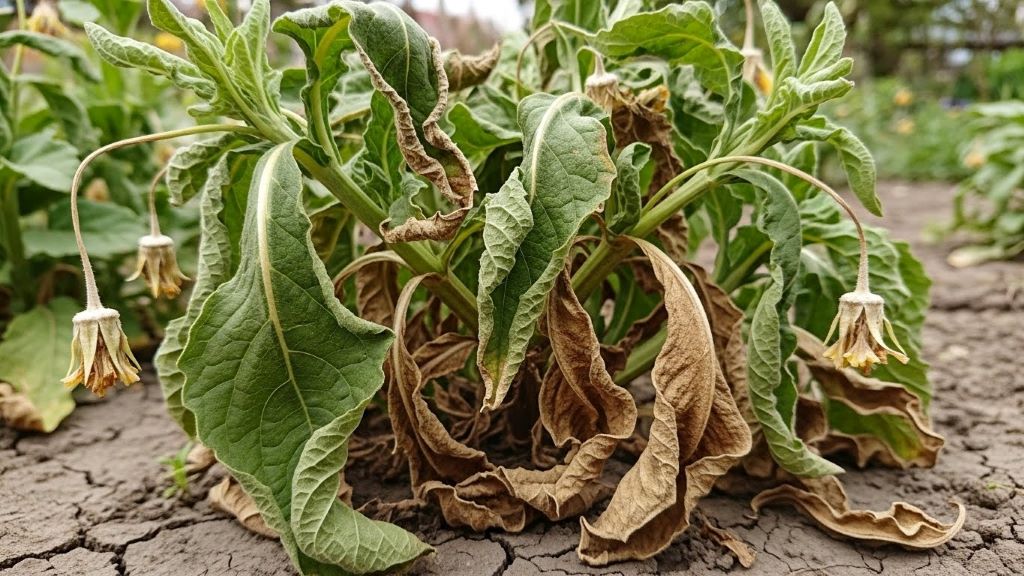
The most obvious sign of underwatering appears in the leaves. They become dry and crispy to the touch, starting at the tips and edges. The leaves may curl inward to reduce surface area and conserve moisture. Eventually, they turn brown and fall off the plant.
Soil Pulling Away from Container Edges
When soil becomes extremely dry, it shrinks and pulls away from the sides of pots. This creates gaps that allow water to run straight through without being absorbed. Therefore, the soil cannot retain moisture even when you water the plant.
Slow Growth and Wilting
Underwatered plants stop growing as they focus energy on survival rather than development. The stems and leaves droop because cells lack the water pressure needed to stay rigid. However, the plant usually perks up quickly after receiving water if caught early enough.
Leaf Drop
Plants shed leaves to reduce water loss through transpiration. This survival mechanism helps the plant conserve its limited moisture. Consequently, you may notice more leaves falling than normal, especially older leaves at the bottom of the plant.
Signs of Overwatered Plants
Overwatered plants exhibit different symptoms that stem from root damage and lack of oxygen. These signs require immediate attention to prevent root rot and plant death.
Yellowing Leaves
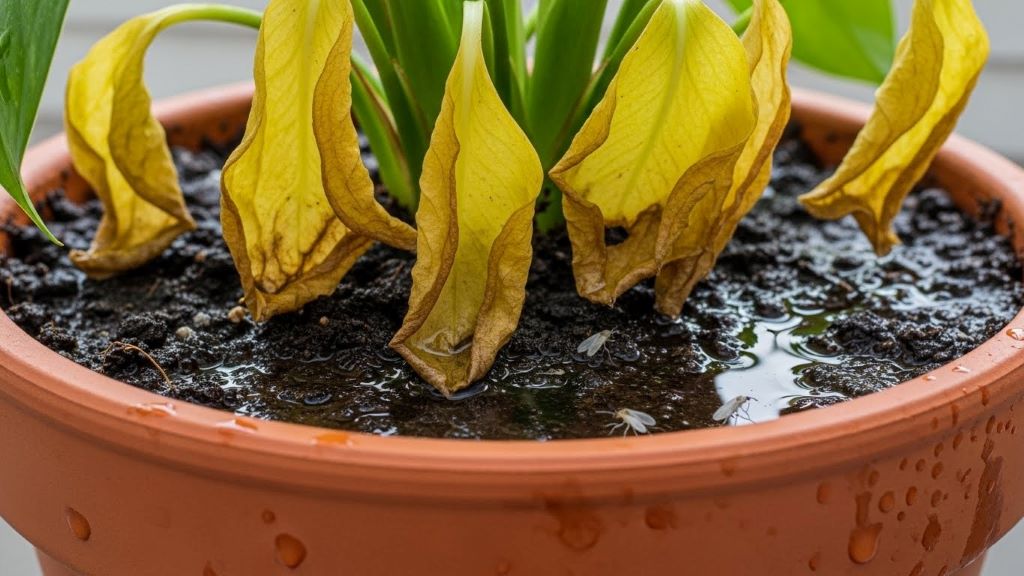
Overwatered plants develop yellow leaves that remain soft and limp. The yellowing typically starts with lower leaves and moves upward. Unlike nutrient deficiencies, this yellowing comes with soggy soil and doesn’t improve with fertilizer.
Soft, Mushy Stems
Excess water causes stems to become soft and mushy rather than firm and upright. The plant cannot support itself properly because the tissues break down. Additionally, you might notice a foul odor from rotting plant material.
Fungal Growth and Mold
Constantly wet soil creates the perfect environment for fungal diseases and mold. You may see white, gray, or green fuzzy growth on the soil surface. Mushrooms might even sprout from the potting mix, indicating excessive moisture levels.
Root Rot
The most serious consequence of overwatering happens underground. Roots need oxygen to function properly, but waterlogged soil suffocates them. The roots turn brown or black and become slimy. According to research from University Extension programs, root rot represents one of the most common causes of houseplant death and can be prevented with proper watering practices.
Edema and Blisters
Overwatered plants sometimes develop small blisters or bumps on their leaves called edema. This occurs when roots absorb water faster than the plant can use it. The excess water pressure causes cells to burst, creating raised, corky spots on leaf surfaces.
Key Differences in Appearance
Understanding the visual differences between underwatered and overwatered plants helps you respond appropriately.
Underwatered plants have dry, brittle leaves that crunch when touched. The soil feels hard and dusty. In contrast, overwatered plants have soft, limp leaves that feel soggy. Their soil remains wet and heavy.
Underwatered plants typically wilt uniformly throughout the entire plant. However, they recover quickly once watered. Overwatered plants show progressive yellowing and deterioration that doesn’t improve with standard watering routines.
Testing Soil Moisture
Checking soil moisture before watering prevents both underwatering and overwatering. Several reliable methods help you assess moisture levels accurately.
The Finger Test
Insert your finger two inches deep into the soil. If it feels dry at this depth, the plant needs water. If it feels moist or wet, wait before watering. This simple test works well for most garden plants and houseplants.
Moisture Meters
Electronic moisture meters provide precise readings at different soil depths. These tools remove guesswork from the watering process. Additionally, they help you understand moisture patterns throughout the root zone.
Weight Method
Lift your potted plants regularly to feel their weight. A well-watered pot feels significantly heavier than a dry one. Over time, you’ll develop a sense for when plants need watering based on weight alone.
How to Fix Underwatered Plants
Correcting underwatering requires gradual rehydration to avoid shocking the plant. Follow these steps to revive thirsty plants safely.
First, water the plant thoroughly until water drains from the bottom. Let the soil absorb moisture for several minutes, then water again. This double watering ensures complete soil saturation after severe drying.
Next, place the plant in a shaded location for a few days. This reduces water loss through transpiration while the plant recovers. Avoid fertilizing until the plant shows signs of new growth, as damaged roots cannot process nutrients effectively.
Finally, adjust your watering schedule to prevent future problems. Most garden plants prefer consistent moisture rather than cycles of drought and flooding.
How to Fix Overwatered Plants
Rescuing overwatered plants proves more challenging than fixing underwatered ones. However, quick action can save plants before root rot becomes fatal.
Stop watering immediately and allow the soil to dry out substantially. Remove the plant from its container if possible and inspect the roots. Healthy roots appear white or tan and feel firm. Diseased roots look brown or black and feel mushy.
Trim away any rotting roots with clean, sharp scissors or pruning shears. Repot the plant in fresh, well-draining soil. Choose a container with adequate drainage holes to prevent water accumulation. According to guidelines from major agricultural institutions, proper drainage represents the most critical factor in preventing overwatering issues.
Moreover, ensure the pot size matches the plant size. Oversized containers hold excess moisture that small root systems cannot absorb quickly enough.
Prevention Strategies
Preventing watering problems proves easier than fixing them. Implement these strategies to maintain optimal moisture levels in your garden.
Water plants early in the morning when temperatures are cooler. This allows plants to absorb moisture before heat increases evaporation. Evening watering can promote fungal diseases because plants remain wet overnight.
Use mulch around garden plants to retain soil moisture and regulate temperature. Mulch reduces evaporation and keeps roots cooler during hot weather. Therefore, plants need less frequent watering and experience less stress.
Improve soil quality by adding organic matter like compost. Good soil structure provides both drainage and water retention. Sandy soils drain quickly and need frequent watering, while clay soils hold water too long.
Choose appropriate containers with drainage holes for potted plants. Never let pots sit in standing water for extended periods. Elevate containers slightly to ensure water flows away completely.
Environmental Factors Affecting Water Needs
Several environmental conditions influence how much water your plants require. Adjusting watering based on these factors keeps plants healthy year-round.
Hot, sunny weather increases water loss through evaporation and transpiration. Plants need more frequent watering during heat waves. Conversely, cool, cloudy weather reduces water needs significantly.
Humidity levels affect how quickly plants lose moisture. High humidity slows transpiration, while dry air accelerates it. Indoor plants near heating vents or air conditioners need more frequent watering than those in humid bathrooms.
Wind exposure increases water loss from both soil and plant leaves. Gardens in windy locations require more attention to watering needs. Consider windbreaks or sheltered planting areas for sensitive species.
Conclusion
Distinguishing between underwatered and overwatered plants requires careful observation and understanding of key symptoms. Underwatered plants display dry, crispy leaves, pulled-away soil, and quick wilting that recovers rapidly with water. Overwatered plants show yellow, soft leaves, mushy stems, fungal growth, and root rot that progresses slowly.
Testing soil moisture before watering prevents both problems and ensures your plants receive appropriate care. The finger test, moisture meters, and weight method all provide reliable information about watering needs. When problems occur, underwatered plants respond well to thorough watering and temporary shade, while overwatered plants need soil drying, root inspection, and possible repotting.
Prevention through proper watering schedules, suitable containers, quality soil, and environmental awareness keeps your garden thriving. Understanding your specific plants and adjusting care based on conditions ensures beautiful, healthy growth throughout the season.
Frequently Asked Questions
Can a plant recover from severe underwatering?
Yes, most plants can recover from severe underwatering if they haven’t died completely. Water thoroughly and provide shade while the plant recuperates. However, some leaf damage may be permanent even after recovery.
How long does it take for an overwatered plant to recover?
Recovery time varies depending on damage severity but typically takes two to four weeks. Plants with minor root damage recover faster than those with extensive root rot. Providing proper drainage and avoiding additional watering helps speed recovery.
Should I water plants daily during summer?
Not necessarily. Watering frequency depends on plant type, container size, soil composition, and specific weather conditions. Check soil moisture before watering rather than following a rigid schedule. Some plants may need daily watering while others need water only weekly.
What time of day is best for watering plants?
Early morning is ideal for watering plants because temperatures are cooler and plants can absorb moisture before heat increases evaporation. Evening watering works but may promote fungal diseases. Avoid midday watering when sun and heat cause rapid evaporation.
Can yellow leaves turn green again after fixing watering issues?
No, yellow leaves cannot return to green once discolored. However, the plant can produce new healthy growth after you correct the watering problem. Remove severely damaged leaves to redirect energy toward new growth.
Related Topics:
Bubble Gum’s Climate Compatibility: A Deep Dive
